Tree Removal Rules in Athens-Clarke County
Short answer: most Athens homeowners do not need a permit to remove a tree on their own property. There are real exceptions, and a few of them are expensive to get wrong, so it is worth five minutes.
This page is general information drawn from what Athens-Clarke County publishes, not legal advice. Rules change, and the county is the authority on its own ordinance. If your situation is unusual or the money involved is significant, ask the county directly before anyone starts cutting.
Why Athens has a tree ordinance at all
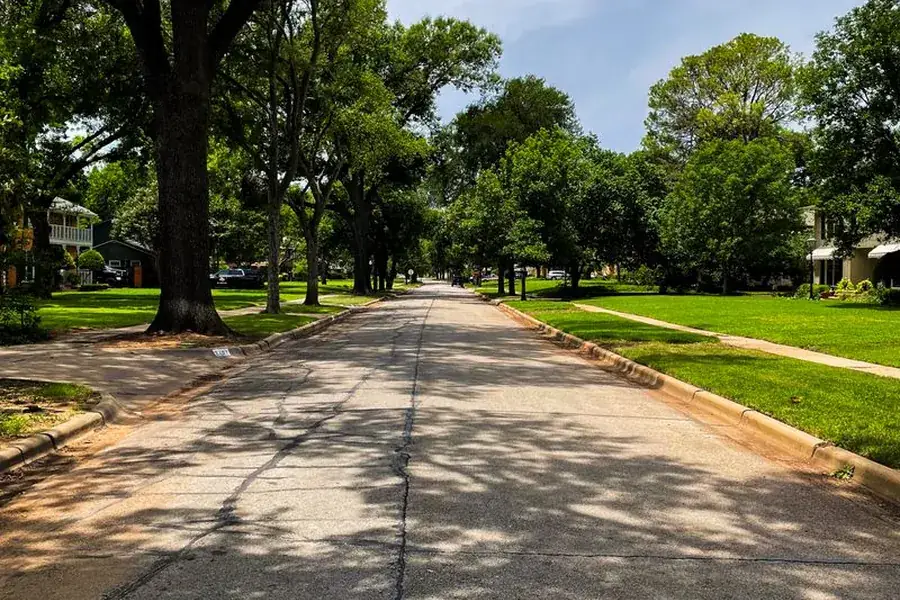
Athens-Clarke County adopted its Community Tree Management Ordinance in 2005 to sustain the benefits the community forest provides, and the ordinance works toward a goal of maintaining at least 45% canopy cover across the county. It pursues that mainly by requiring conservation and replanting of canopy, street trees, and parking lot trees during development.
That last phrase is the key to the whole thing. The ordinance is aimed primarily at development, not at homeowners taking down a tree in the back yard.
The basic rule for private property
Outside the Milledge Avenue Overlay District, the ordinance does not regulate trees on privately held lots that have not been developed since 2005. Non-protected private trees may be removed at any time, for any reason.
The county also sets out when non-protected private trees may be removed without notification:
- The lot is less than one acre in a single-family residentially zoned district
- Five or fewer healthy trees are removed in a year
- Or a Certified Arborist, Registered Forester, or County Agent determines the tree is diseased, insect infested, or a danger to human life or property
For a typical Athens house on a typical lot, taking down one dead pine, that is the end of the enquiry.
What counts as a protected tree
Protected trees are treated differently. Under the county's rules, protected trees are:
- Athens-Clarke County trees
- Landmark trees
- Trees planted or conserved to meet the requirements of the Community Tree Management Ordinance
Protected trees may not be removed without just cause. And if removing one would drop a property below its total canopy requirement, or the tree had received credit as a parking lot tree or a street tree, the tree must be replaced.
If your property was developed after 2005, or has a landscape plan on file, some of the trees on it may be in the third category without anybody having told you. That is worth checking before you schedule work.
When a protected tree can be removed
The county publishes the criteria. A protected tree may be removed where a Certified Arborist, Registered Forester, or Athens-Clarke County agent determines that it:
- is dead or in an unhealthy condition
- has greater than 50% dieback of the crown
- has wounds greater than one third of the circumference of the trunk
- has wounds greater than two thirds of the diameter of the trunk
- has limb defects that would require more than 50% of the canopy to be removed if corrective pruning were used
- has an irresolvable conflict with infrastructure that poses a hazard to public health
- has an insect or disease problem that is not easily cured and has a high probability of spreading to other trees
This is a genuinely useful list even for unprotected trees, because it is a reasonable, published standard for deciding whether a tree needs to go at all.
Hazardous trees are never trapped
Worth stating plainly, because people worry about it: the county is explicit that in no case will the Community Tree Management Ordinance require that a hazardous tree be retained on an urban site.
If a tree is genuinely dangerous, the ordinance is not what stands between you and dealing with it. How that work is done is on our dead and hazardous tree removal page, and if the tree is on a structure right now, go straight to emergency tree service in Athens.
The Milledge Avenue exception
The Milledge Avenue Overlay District is the named exception to the private-lot rule. If your property falls within it, do not assume the general private-property position applies to you. Check first.
Clearing a lot, and the five-year trap
This one is expensive and almost nobody mentions it.
The ordinance regulates timber harvesting, in order to keep enough canopy available for conservation when a site is later developed. Non-exempt properties that remove trees may be subject to a five-year timeout on development.
If you are clearing land with any intention of building on it, that is a far bigger financial question than the cost of the tree work. Get the sequence right before the saws start.
We work through the permit question before we quote, not after.
Request a free written estimateWhose tree is it, and who pays when it falls

This is the most common dispute in tree work, and Athens-Clarke County publishes clear guidance on how Georgia treats it.
If a neighbor's apparently healthy tree falls onto your property, your own insurance handles the claim. If the tree had known defects, it becomes their insurer's responsibility. The practical consequence is that everything turns on what was visible and what was documented before the failure.
The county's guidance frames three questions after a failure: were parts of the tree obviously dead, were there easily detectable signs of decay or decline, and who owned the tree.
On what counts as obvious, the guidance cites Georgia case law. Dead tissue must be readily apparent or documented, and while a single small dead limb does not amount to negligence, a tree full of dead limbs does. On decay, the standard is that it must be patently visible, meaning mushrooms, fungal brackets, or open cavities that anyone could see, rather than a suspicion or an uneasy feeling about a tree.
So if you are worried about a neighbor's tree, a fence-side conversation is worth very little. The county's guidance recommends getting a qualified arborist's written opinion and putting your neighbor on notice in a way that creates a record, such as certified mail. Documentation before a failure is what decides who pays after one.
Trees on the property line
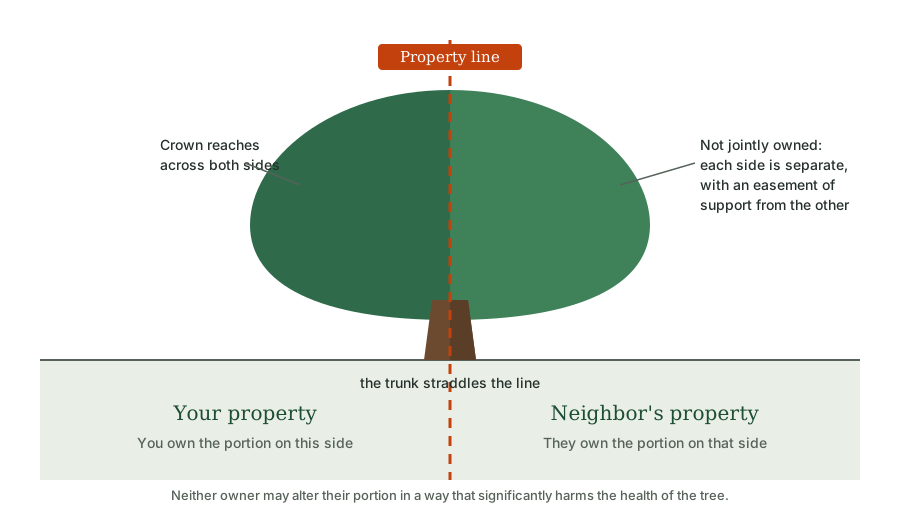
Boundary trees have their own rule, and it surprises people.
Adjoining landowners do not jointly own a tree on the line. Under the case law the county cites, each owner owns the portion of the tree on their side, with an easement of support from the neighbor, and each may alter their portion so long as they do not significantly harm the health of the tree.
There is a sharp edge to this: the county's guidance notes that a tree service which mishandles a boundary-line tree can be held liable for the landscape value of the tree. On a mature specimen that is a serious sum. It is why we prune to the line rather than through it, and why we will tell you when a job needs a conversation with the neighbor before it needs a saw.
Street trees and the right of way
Not every tree near your house is yours. The county's Community Tree Program exists to conserve and professionally manage publicly owned trees, alongside supporting private owners. If the tree in question is in the public right of way rather than on your lot, it may be the county's to manage, and hiring someone to remove it would be both unnecessary and unwise.
If you are unsure where your property ends, ask the county before you hire anyone.
Free advice you have already paid for
Athens-Clarke County offers tree management consultations to county residents as a tax-funded service, and runs a Community Tree Program that publishes ordinance guidance, a tree species list, and a native plant guide written for Georgia Piedmont conditions. If your question is whether a tree really needs to come down, that is a good place to start, and it does not cost you anything extra.
Outside Athens-Clarke County the rules change
This catches people who move a few miles.
Oconee County, which includes Watkinsville, does not run the same canopy ordinance. Its tree-related regulation runs mainly through timber harvesting rules, where the harvest permit is issued by the Georgia Forestry Commission and forwarded to the county, alongside landscaping and buffer standards that deal with removal for development or removal without replanting, and land-disturbance permitting.
Different county, different rules, same trees. Our service area page lists the towns we cover and the counties they sit across.
Common questions
Is it illegal to cut down a tree on your own property in Georgia?
Not as a general matter. Regulation is local, and in Athens-Clarke County the ordinance largely targets development and protected trees rather than ordinary private removals. Your own subdivision covenants or HOA rules are a separate question the county does not govern.
Do I need a permit to remove a dead tree?
Usually not, and a tree that is dead or in an unhealthy condition is one of the county's own criteria for removing even a protected tree.
What if my tree is dropping limbs into the road?
That is worth raising with the county, because it touches the public right of way. It is also a good reason to get it looked at quickly.
Can I make my neighbor remove their dead tree?
You cannot force it yourself, but you can change who bears the risk by documenting the tree's condition and putting them on notice. See the section above on defects and documentation.
Does an HOA or a deed restriction override the county?
They are separate. The county sets ordinance requirements; a covenant is a private agreement. You can be within county rules and still in breach of a covenant, so check both.
What is the Georgia law on branches overhanging from a neighbor's tree?
For a tree that sits on the line, the county's guidance is clear: each owner owns the part on their side and may alter it, as long as they do not significantly harm the health of the tree, and a tree service that mishandles a boundary tree can be held liable for its landscape value. For a tree that stands wholly on the neighbor's side, read the county's "Trees and the Law" guidance for the detail before anyone cuts, and talk to the neighbor first. Cutting to the line without harming the tree is one thing; damaging a mature tree you do not own is an expensive argument to start.
If you want it looked at
We work through the permit question before we quote, not after, so the estimate you get reflects the job you can actually have done.
Request a free written estimate or call (571) 412-0006.