Tree Trimming and Pruning in Athens, GA
We prune trees around Athens-Clarke County: limbs off roofs, canopies lifted over drives, deadwood taken out before it falls, and crowns thinned on trees that catch too much wind.
Trimming or pruning? The difference matters less than the reason
People use the two words interchangeably, and we are not going to be precious about it. Where the distinction is useful: pruning usually means cutting for the health and structure of the tree, and trimming usually means cutting for clearance and appearance. Most real jobs are some of both.
What actually matters is why the cut is being made. Every branch we take is a wound the tree has to seal, so there should be a reason for each one. If someone cannot tell you why a particular limb is coming off, that is worth asking about.
People tend to search for a tree trimming service when they want limbs off a roof or a driveway, and for a tree pruning service when they are worried about the tree itself. We do both, and on most jobs one visit covers both. If you are not sure which you need, describe the problem rather than the cut, and we will work out the cut on site.
The work, in plain terms
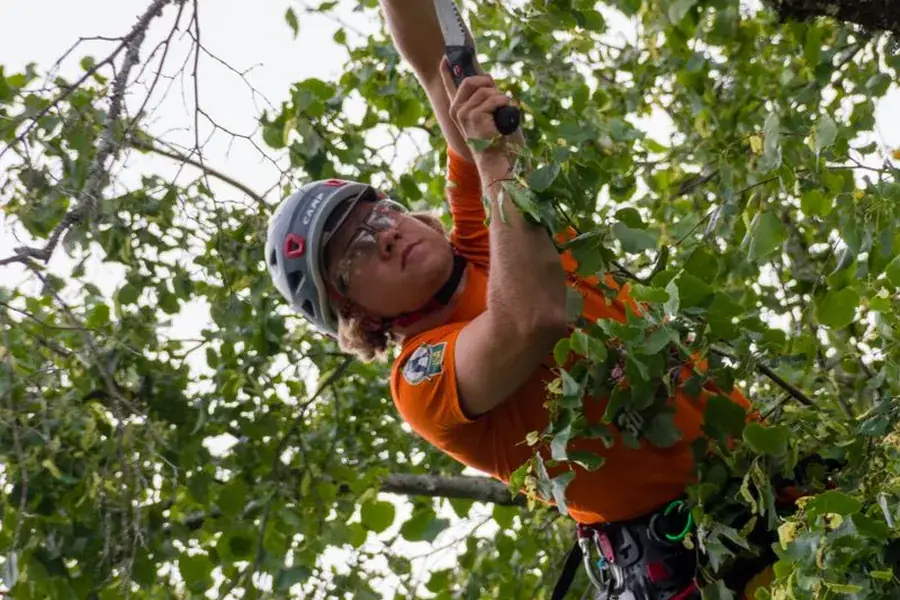
Deadwood removal. Taking out dead and dying branches. This is the highest-value pruning most Athens homeowners can buy, because dead limbs are what actually comes down on cars, roofs, and people.
Crown thinning. Selectively removing branches so air and light move through the canopy instead of pushing against it like a sail. Useful on dense hardwoods sitting over a house.
Crown raising. Lifting the lower canopy for clearance over a driveway, a walkway, a roofline, or a yard you would like to mow without ducking.
Clearance from the house. Getting limbs off the roof and away from siding and gutters, which is the single most common reason people call us about pruning.
Structural pruning on young trees. Cheap now, and it prevents the co-dominant stems and tight branch unions that split in a storm fifteen years from now.
Storm preparation. Reducing end weight and clearing deadwood before hurricane remnants and summer thunderstorms arrive, rather than after.
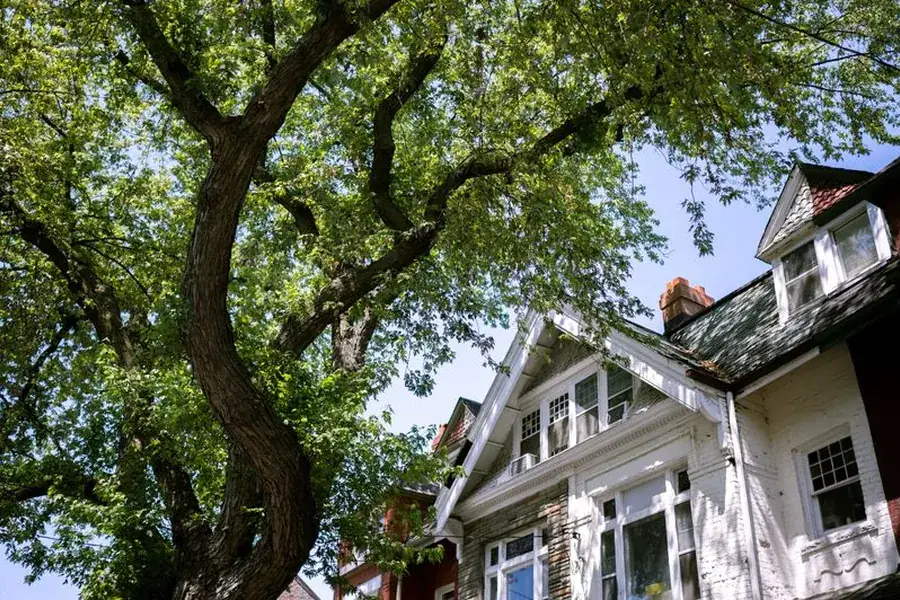
Tell us which trees, and what is bothering you about them.
Request a free written estimateWhat we will not do
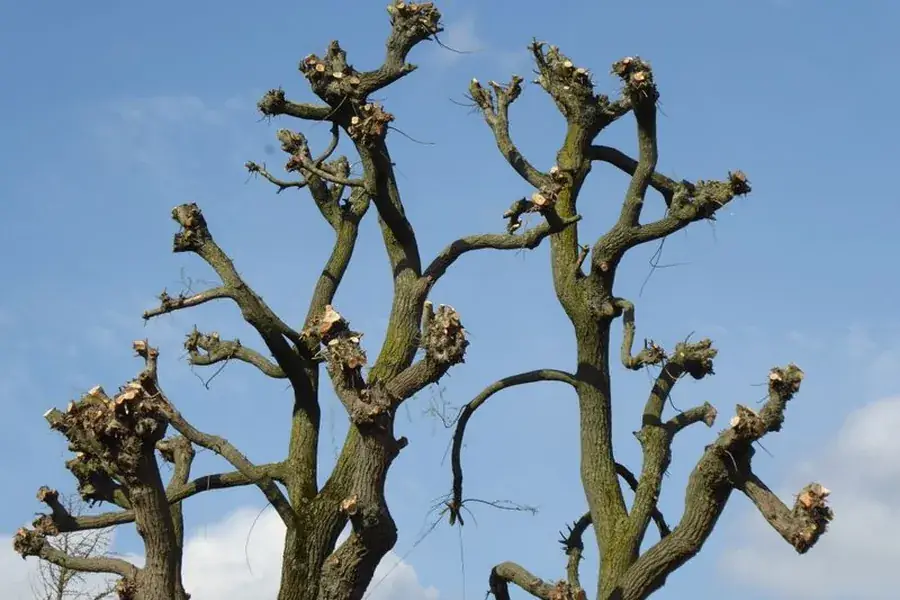
We do not top trees. Cutting a canopy back to stubs is quick and it looks decisive, but it leaves large wounds and the regrowth that follows is dense, upright, and weakly attached at exactly the points that later fail. If a tree is genuinely too big for its spot, the honest options are a proper reduction or removal, not topping.
We also do not prune anything into an energized power line. Line clearance around utility conductors is utility work, not homeowner work and not ours. Athens-Clarke County publishes guidance on utility line clearance pruning through its Community Tree Program, and if your problem limb is in the wires, that is the route to take.
Do you need an arborist or a tree service?
Plenty of people searching for pruning in Athens are really asking this, so here is a straight answer.
What the word means. An arborist is someone trained in the care of individual trees. "Certified arborist" usually refers to the credential issued by the International Society of Arboriculture, which is earned by examination and kept current through continuing education, and which exists to help homeowners identify qualified tree care professionals (ISA).
When a written arborist opinion is worth paying for. Three situations, all of them about paperwork rather than saws. If a neighbor's tree worries you, the county's guidance on Georgia tree law says documentation of the tree's condition, including a written arborist opinion delivered so there is a record of it, is what strengthens your position if the tree later fails (Athens-Clarke County). If a protected tree is involved, the county's own removal rules accept a finding from a Certified Arborist, Registered Forester or County Agent that the tree is diseased, infested or dangerous (Athens-Clarke County). And if the tree is valuable and you want it kept, a health assessment before anyone cuts is money well spent.
What you can get for free first. Athens-Clarke County offers tree management consultations to county residents as a tax-funded service, and runs a home tree consultation through its Community Tree Program (Athens-Clarke County). If your question is "is this tree in trouble", start there.
What does not need a credential. Deadwood, clearance off the roof, lifting a canopy over the drive, and storm cleanup are judged by the quality of the cuts and by whether the crew is insured, not by a certificate. Ask about method, ask for proof of insurance, and ask why each limb is coming off. We will tell you plainly when your question is one for a written opinion rather than for a crew, and we would rather send you to the county's free consultation than sell you a cut the tree does not need.
When to prune, in this climate
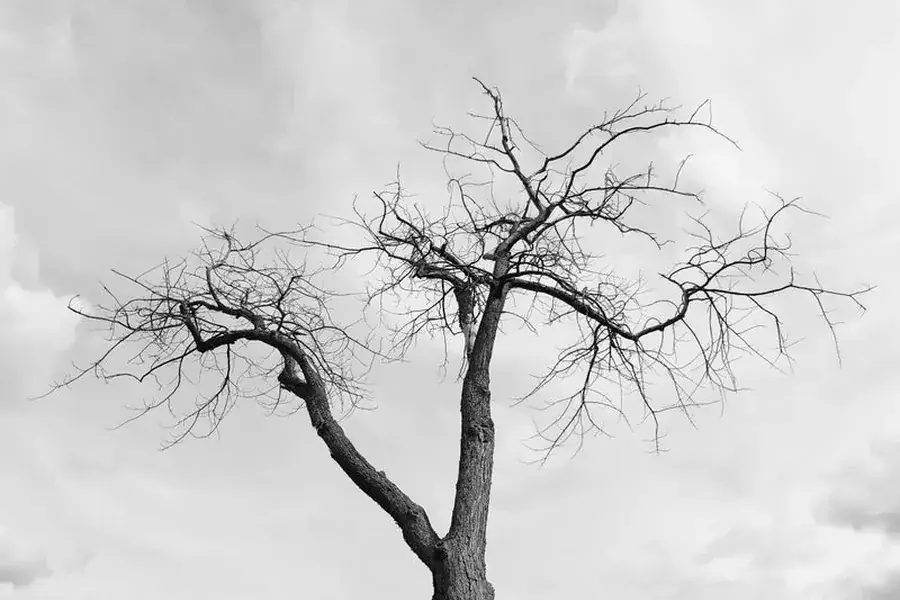
This is the part most pages skip, and it saves people money.
For most trees and shrubs, University of Georgia Extension points to the dormant winter season. January and February are described as ideal months for pruning overgrown trees and shrubs, and the best window is given as the dormant season, late February to early March, before new growth starts in spring. Spring-flowering plants are the exception: prune those after they have finished flowering, or you will cut off the show you were waiting for.
So a rough rule for Athens:
| When | What makes sense |
|---|---|
| January to early March | Most structural pruning, thinning, and reduction. The tree is dormant and the structure is visible with the leaves off |
| After flowering, spring | Spring-flowering trees and shrubs |
| Any time | Dead, broken, hanging, or actively hazardous limbs. Safety does not wait for a season |
| Hot, dry mid-summer | The time to be most conservative about heavy live pruning on a stressed tree |
If you call us in July about shaping a healthy tree, there is a decent chance we will suggest waiting until winter and tell you why. If you call us in July about a cracked limb over the driveway, we will come now.
The same seasonal advice holds on the other side of the county line, in Watkinsville and Oconee County. The trees do not read the ordinance.
Trees on the property line
Pruning a tree that straddles a boundary is where friendly neighbors sometimes stop being friendly, and Georgia has settled law on it.
Athens-Clarke County's own guidance on Georgia tree law explains that adjoining landowners do not jointly own a boundary-line tree. Each owns the portion on their side of the line, with an easement of support from the other side, and each may alter their portion provided they do not significantly harm the health of the tree (Athens-Clarke County). The same guidance notes that a tree service which mishandles a boundary tree can be held liable for the landscape value of that tree, which is not a small number on a mature specimen.
In practice that means we will prune to the line and not across it, and if the work would meaningfully affect the whole tree we will tell you before we start rather than after. More on this on the Athens tree rules page.
Common questions
How often should a mature tree be pruned?
Less often than most people assume. Healthy mature trees generally need attention every few years, mainly for deadwood and clearance. Annual heavy pruning is usually a sign something else is wrong with the tree's placement.
Will pruning fix a tree that is leaning?
No. A lean that developed after a storm or heavy rain is a root issue, and pruning does not address roots. That one needs looking at, and it may be a removal.
Do you clean up?
Yes. Brush is chipped, cuttings are cleared, and the ground gets raked. If you want the chips left as mulch, say so and they are yours.
Can you prune around the house without walking on the roof?
Usually. Method depends on access, and we will tell you what we plan to do before we do it.
Is pruning cheaper than removal?
Generally yes, and on a tree worth keeping it is much better value. See our page on tree removal cost in Athens for what moves the price on either job.
How many branches can you cut off a tree without killing it?
There is no single safe number, and anyone who gives you one is guessing. What University of Georgia Extension does say is worth more than a percentage: cut back to a bud, a lateral branch or the trunk rather than leaving a stub, because stubs heal slowly or not at all and let insects and disease in; take heavy limbs off in three cuts so the bark does not tear down the trunk; and be careful with pines, cedars, junipers and other narrow-leaf evergreens, which may die when over half of their foliage is removed (UGA Extension). Topping, which strips most of a canopy at once, is the one thing we refuse to do for exactly this reason.
Get a written estimate
Tell us which trees, and what is bothering you about them. Pruning is one part of our Athens tree service, and every part of it is quoted the same way: in writing, after we have looked.
Request a free written estimate or call (571) 412-0006.