How Much Does Tree Removal Cost in Athens, GA?
Here is the honest version: nobody can price your tree from a phone call, and a company that gives you a firm number without looking at it is either guessing or planning to revise it later.
What we can do is tell you exactly what moves the price, so that when you get quotes you understand why they differ and which one is actually cheaper.
The seven things that decide the price
| What | Why it matters |
|---|---|
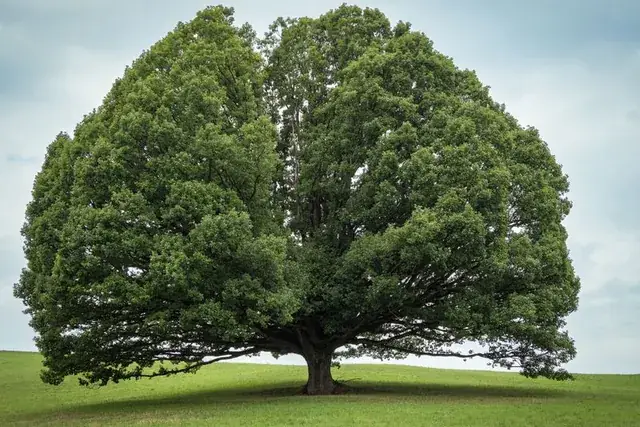
| Height and spread | Bigger trees mean more cuts, more rigging, more time in the canopy, and more material on the ground. Price does not rise in a straight line with height |
| Access | A tree we can reach with a truck and a chipper is a fundamentally different job from the same tree behind a narrow gate in a back yard, where every piece is carried out by hand |
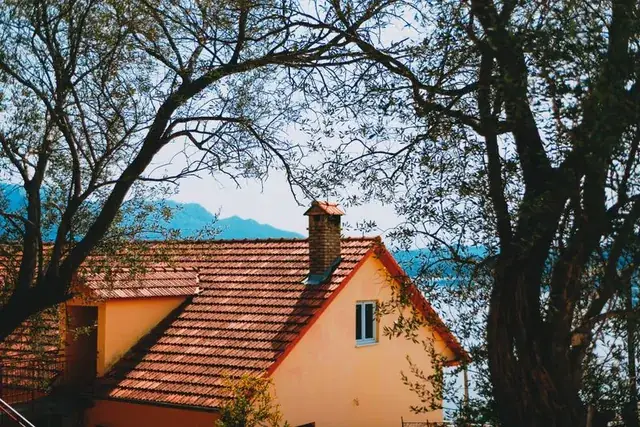
| What is underneath and around it | Open lawn is cheap. A roof, a deck, a fence, a pool, a greenhouse, a neighbor's driveway, or a septic field means every piece gets lowered on a rope instead of dropped |
| Condition | A dead or decayed tree usually costs more than a healthy one of the same size. It is less predictable to climb and rig, and it demands a more cautious method |
| Species and wood | Dense hardwood makes more weight and more volume than a pine of the same height. It affects both the rigging and the hauling |
| Cleanup and where the wood goes | This is the one most people underestimate. Cutting up and carrying out the debris is a large share of the hours on a typical job, and hauling adds disposal on top |
| The stump | Grinding is nearly always quoted separately. If you assume it is included, you will be surprised |
Two more things push a price up, and both are worth knowing about in advance: crane work, where a piece is too heavy or the landing zone too tight to rig conventionally, and emergency response, where a crew is pulled out at short notice, often in poor conditions.
What the national numbers say
We are not going to publish an Athens price list, because a list like that would be a guess dressed up as a fact.
What we can give you is properly sourced national context. Across the United States, tree removal averages around $850, with most jobs landing between $450 and $1,450. Large or hazardous removals run higher, in the region of $2,400 to $3,400.
Those are national figures. They are here to tell you whether a quote is in a sane range, not to tell you what your tree costs. A 90-foot pine leaning over a roof on a tight lot is not an average job anywhere.
Is there a Georgia average? Not one we would put our name to. The Georgia and Atlanta figures you will find are published by directories, lead-generation sites, and individual companies describing their own metro, and none of them is measured from Athens jobs. We looked before writing this page and chose not to repeat any of them. The national range above, plus the seven drivers, will get you closer to a fair Athens quote than a state number somebody modelled.
Why the price lists you find online are not quotes
Search for what tree removal costs in Athens and you will find several pages confidently listing prices by tree height. Most of them are published by national lead-generation and directory sites rather than by anyone who has stood in an Athens yard. The numbers are modelled, not measured.
Use them for orientation if you like. Do not use them to argue with a quote, and be wary of a local company whose published prices look suspiciously like those tables, because the same guesswork is being repeated back to you with a local name attached.
The only accurate price for your tree comes from someone looking at your tree.
Request a free written estimateHow to actually pay less
Some of these are worth real money.
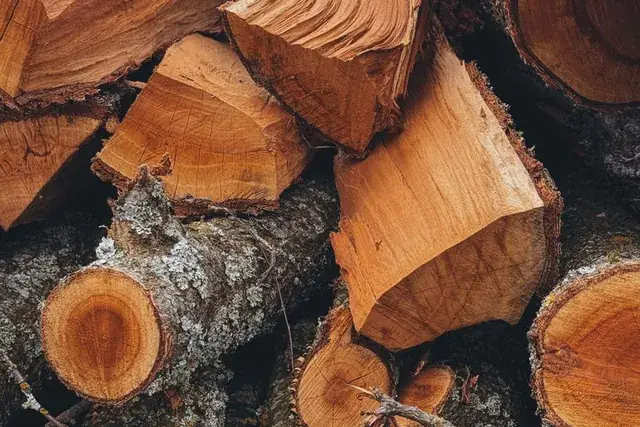
- Take the wood. Ask what the price is if the crew chips the brush and leaves the rounds. If you burn firewood, or you know somebody who does, this is the single easiest saving available, because hauling is time and disposal fees.
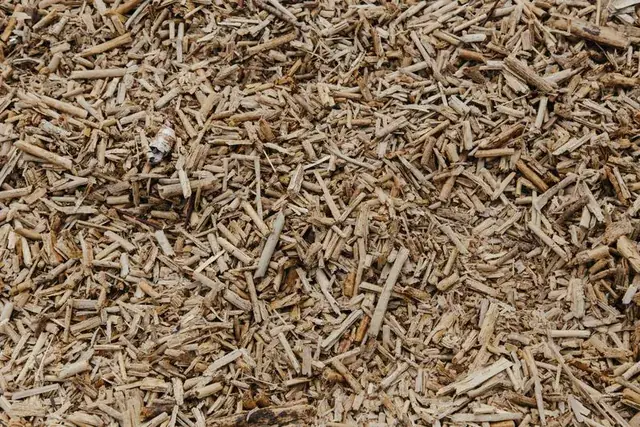
- Keep the chips. They make usable mulch for beds and paths and they cost nothing to leave.
- Bundle the work. Several trees in one visit is cheaper per tree than three separate mobilizations, because a large share of the cost is getting the crew and the equipment there at all.
- Be flexible about timing. Work that can be scheduled is cheaper than work that cannot. Firmer winter ground can also mean less lawn damage getting equipment in, which means less to put right afterwards.
- Improve access before the crew arrives. Moving the cars, unlocking the gate, and clearing the side return costs you nothing and saves billable time.
- Prune instead of removing, where the tree is worth keeping. A reduction or clearance job is usually a fraction of a removal, and it is the right answer more often than people expect.
What we would not recommend: choosing on price alone from someone who cannot show proof of liability insurance and workers' compensation. Uninsured tree work is cheaper for a reason, and the saving evaporates the first time something goes wrong at height.
What a written estimate should tell you
If a quote does not answer these, ask before you sign:
- Which trees, described so there is no ambiguity about which ones.
- Whether the stump is included, and to what depth.
- What happens to the brush, the rounds, and the chips.
- Whether the price includes cleanup and raking.
- What is excluded. Landscape repair, fence removal to get access, and permit costs are common exclusions.
- That the price is fixed for the scope described, and what would change it.
Our estimates put all of this in writing before any work starts.
Cost, insurance, and permits
Two things that change the arithmetic and are easy to miss.
Insurance. Athens-Clarke County's guidance on Georgia tree law notes that many homeowner policies limit coverage for the trees themselves to roughly $500 per tree, up to about 5% of the dwelling limit, and that this typically applies to causes such as fire, lightning, vandalism, vehicle damage, and theft, with wind and hail damage generally not covered for trees. Damage a falling tree does to your house is a different matter and a different part of the policy. Check your own documents. More on this on our emergency tree service in Athens page.
Permits. Most private residential removals in Athens-Clarke County do not need one, but protected trees, Landmark trees, larger lots, and anything counting as timber harvesting are treated differently, and a non-exempt property that removes trees can face a five-year timeout on development. That is a much larger financial consideration than the removal itself if you were planning to build. See the tree rules page.
Common questions
How big does a tree have to be to cost $1,000?
There is no size that reliably costs a given amount, which is exactly why this page is about drivers rather than a price list. A modest tree in a terrible position can cost more than a large one in an open field.
What is the cheapest time of year for tree removal?
Winter tends to be easier and therefore cheaper: no leaves to handle, firmer ground, and clearer structure to work with. The saving is real but modest, and it disappears the moment a job becomes urgent.
Can seniors get a tree removed for free?
Not as a general rule, and we would rather say so plainly than imply otherwise. There is no standing program that removes private trees at no cost. Two things are genuinely worth checking: Athens-Clarke County offers tree management consultations to residents as a tax-funded service, so an opinion on whether the tree needs removing at all costs nothing; and if the tree stands in the public right of way rather than on your property, it may be the county's to manage rather than yours to pay for. Ask before you hire anyone.
Is the stump included?
No, unless the estimate says so. Ask for it to be priced with the removal if you want it done.
Do you charge for an estimate?
No.
What is the average cost of tree removal in Georgia?
There is no measured Georgia figure from a source we trust, and we will not invent one. The figures online are modelled by directories or quoted by companies in other metros. Use the national range above for orientation and the seven drivers to understand your own tree, then get it looked at.
How much does it cost to cut down a 100 ft tree?
A tree that tall is at the top of the size range, and in an Athens yard it is rarely a straight fell. It usually comes down in sections, often with a crane, and it produces a great deal of wood to move. Expect the top of the national range or above it, and expect the answer to depend more on what is underneath the tree than on the height itself. Only a written estimate after a visit will give you the real number.
Get a real number
The only accurate price for your tree comes from someone looking at your tree.
Request a free written estimate or call (571) 412-0006.